
Lessons from Unlikely Places
What Early 20th Century Switchboard Operators Can Teach Us About Modern Ops
“Hello, Operator?”
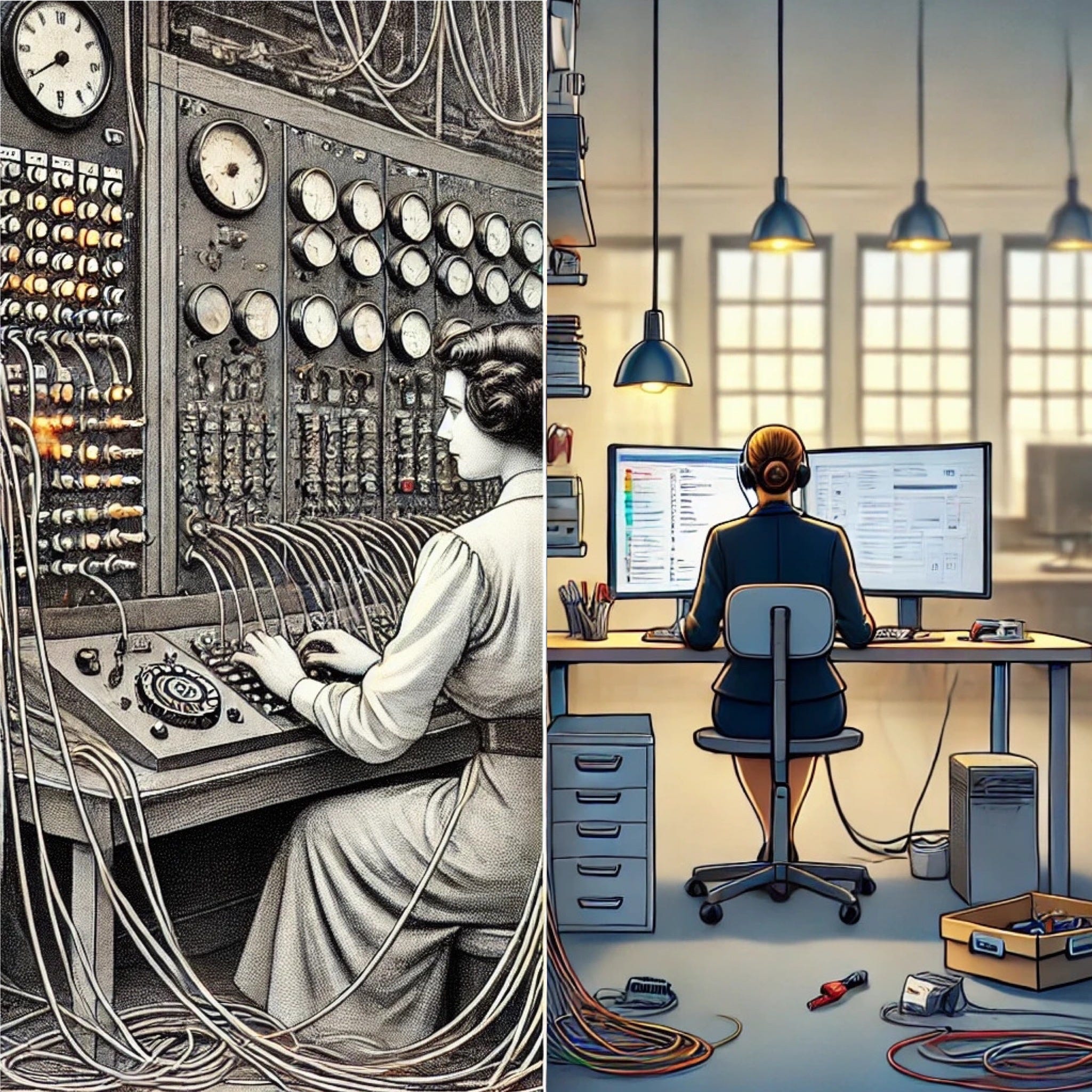
Switchboard operators were the original connectors, the human link that flowed communication. In an era before automated systems, they sat in front of massive panels filled with tangled wires and blinking lights, manually routing calls by plugging and unplugging cords. Each incoming call needed their full attention, and every connection had to be made accurately. One wrong move and someone’s urgent message could be lost. The job was far more demanding than it might seem. Operators managed multiple lines, fielding a constant flow of calls, sometimes hundreds per hour, while staying organized and efficient. Each request required split-second decision-making to keep calls moving smoothly.
The pressure was intense during peak hours or emergencies, but operators couldn’t falter. They were expected to stay calm, polite, and precise. Skilled operators often knew the frequent callers and destinations, anticipating connections before being asked. Their purpose was clear: ensure seamless communication in a world that relied on them to stay connected.
The role wasn’t just technical; it was deeply human. Operators bridged distances, delivered messages, and provided reassurance that someone was always there to help make the connection. In many ways, they were the backbone of communication during the 20th century, embodying efficiency, adaptability, and quiet mastery.
Keeping the Flow of Information Current
In every business, the flow of information bridges the gap between planning and execution. High-level decisions and strategies are meaningless without actionable details reaching the right people at the right time. For messages to be effective, they must connect to the appropriate endpoints and stakeholders.
It is crucial to translate abstract concepts into tasks and filter out noise. Managing this flow means keeping updates, changes, and instructions clear and timely.
While the tools have evolved, with Slack, Zoom, and email flooding us with messages, maintaining connections and keeping communication flowing remains essential. Effective information management filters out non-essential data, translates strategy into action, and maintains clear channels to prevent misunderstandings and delays.
This is the modern switchboard at work, where managing the flow of information ensures everything stays connected and execution stays on track.
“The more you know about the past, the better prepared you are for the future.”
- Theodore Roosevelt
Yesterday’s Operators, Today’s Switchboards
Switchboard operators may be gone, but their approach to managing communication offers timeless lessons for today’s business operators. The tools may have changed, but the need for clear, efficient, and seamless communication remains the same.
Here’s how you can apply the switchboard operator mindset to modern operations:
Bridge Gaps: Just as operators link calls between different lines, remove barriers between departments to ensure teams stay connected. This will keep communication pathways open and everyone in sync.
Filter the Noise: Switchboard operators didn’t connect every line, only the right ones. Focus on routing essential information to the right people and eliminating distractions.
Route Information: Knowing which plug went where, understanding who needs what information, when they need it, and how they prefer to receive it. Accuracy keeps the system flowing.
Maintain Clarity: Operators stayed calm and clear under pressure. Ensure messages are concise, expectations are understood, and everyone moves in sync.
Stay Adaptable: Operators rerouted calls on the fly when lines were jammed. Be ready to adjust when communication pathways get blocked or overwhelmed.
Managing modern communication pathways is the new switchboard. The goal is to keep connections and information flowing and work on track. When you apply the switchboard operator mindset, decisions happen faster, tasks get done smoothly, and problems are resolved before they escalate.
The tools are digital now, but the need for precision, adaptability, and quiet efficiency is as vital as ever.
Sources